


Understanding the Core Wing Chun Forms: Your Path to Mastery
- Ade Rhodes
- Apr 16
- 4 min read
When you start your journey into Wing Chun, the first thing you’ll encounter is its core forms. These forms are the foundation of the art. They teach you the principles, techniques, and flow that make Wing Chun unique. Understanding the core Wing Chun forms is essential if you want to build real skill and confidence. Let’s dive into these forms and see how they shape your practice.
The Core Wing Chun Forms You Need to Know
Wing Chun is built around three main empty-hand forms and one wooden dummy form. Each form has a specific purpose and teaches you different aspects of the art. Mastering these forms will give you a solid base to develop your fighting skills.
Siu Nim Tao (Little Idea)
This is the first and most important form. It focuses on basic hand techniques, structure, and stance. Siu Nim Tao teaches you how to generate power from your centre and maintain balance. It’s slow and deliberate, helping you build muscle memory and precision.
Chum Kiu (Seeking the Bridge)
The second form introduces movement and footwork. It teaches you how to close the distance and bridge the gap between you and your opponent. Chum Kiu also includes turning and stepping techniques, which are crucial for real combat situations.
Biu Jee (Thrusting Fingers)
This form is more advanced and focuses on emergency techniques and recovering from difficult positions. Biu Jee trains you to use quick, powerful strikes and to regain control when you’re off balance.
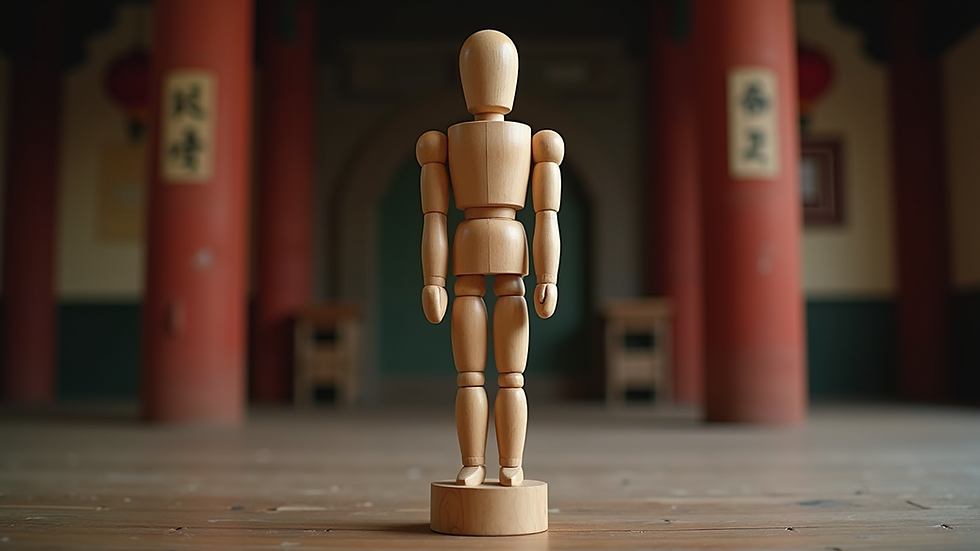
Muk Yan Jong (Wooden Dummy Form)
The wooden dummy form is a practical training tool. It helps you apply the techniques from the empty-hand forms against a solid target. This form improves your precision, timing, and power.
Each form builds on the previous one, creating a complete system that covers all aspects of close-range combat. Practising these forms regularly will sharpen your skills and deepen your understanding of Wing Chun.
Why Mastering Core Wing Chun Forms Matters
Mastering the core Wing Chun forms is not just about memorising movements. It’s about developing a mindset and body awareness that will serve you in any situation. These forms teach you to stay calm under pressure, react quickly, and use your energy efficiently.
When you practise the forms, you learn to:
Maintain proper structure and balance
This prevents you from being easily pushed or thrown off.
Generate power from your centreline
Wing Chun focuses on direct, efficient strikes that use your body’s natural mechanics.
Develop sensitivity and reflexes
Through partner drills and forms, you become more aware of your opponent’s intentions.
Build endurance and mental focus
Repetition of forms strengthens both your body and mind.
If you want to improve your self-defence skills, confidence, and physical fitness, these forms are your starting point. They are the blueprint for everything else you will learn in Wing Chun.
What are the 11 types of martial arts?
While Wing Chun is a powerful and effective martial art, it’s just one of many styles practiced worldwide. Understanding the variety of martial arts can help you appreciate what makes Wing Chun special. Here are 11 popular types of martial arts:
Karate - A Japanese striking art focusing on punches, kicks, and blocks.
Taekwondo - A Korean martial art known for its high, fast kicks.
Judo - A Japanese grappling art emphasizing throws and submissions.
Brazilian Jiu-Jitsu - A ground-fighting system focusing on submissions.
Muay Thai - A Thai striking art using punches, elbows, knees, and shins.
Kung Fu - A broad term for Chinese martial arts, including Wing Chun.
Aikido - A Japanese art focusing on redirecting an opponent’s energy.
Krav Maga - An Israeli self-defence system designed for real-world situations.
Capoeira - A Brazilian martial art combining dance, acrobatics, and fighting.
10. Boxing - A Western sport focusing on punches and footwork.
11. Wing Chun - A Chinese close-combat system known for its efficiency and directness.
Each martial art has its strengths and philosophies. Wing Chun stands out for its simplicity, practicality, and focus on close-range combat. Knowing this helps you understand why the core Wing Chun forms are so important.
How to Practise Wing Chun Forms Effectively
Practising Wing Chun forms is more than just going through the motions. To get the most out of your training, follow these tips:
Start slow and focus on precision
Don’t rush. Move deliberately and pay attention to every detail.
Use a mirror or record yourself
This helps you spot mistakes and improve your posture.
Practice regularly
Consistency is key. Even 10-15 minutes a day makes a big difference.
Focus on your breathing
Controlled breathing helps you stay relaxed and powerful.
Integrate partner drills
Practising with a partner helps you apply the forms in real situations.
Seek feedback from an instructor
A good teacher will correct your form and guide your progress.
Remember, the goal is to internalise the movements so they become natural. This way, you can react instinctively when it matters most.

Your Next Step: Embrace the Journey of Wing Chun
Now that you understand the core Wing Chun forms, it’s time to take action. These forms are your gateway to mastering Wing Chun Kung Fu. They will build your character, confidence, and practical self-defence skills.
If you’re ready to commit, start by learning the basics of Siu Nim Tao. Focus on your stance, hand positions, and breathing. Then, gradually move on to Chum Kiu and Biu Jee. Don’t forget to include the wooden dummy form to sharpen your techniques.
For those in the Black Country and West Midlands, finding a supportive school can make all the difference. A good Wing Chun school will help you progress at your own pace, free from ego and pressure.
If you want to explore more about what are the wing chun forms, take the time to research and ask questions. The more you know, the stronger your foundation will be.
Embrace the journey. Train hard. Stay focused. Your mastery of Wing Chun starts here.


Comments